
Chilli-Lime Beef Jerky Bites: The Portable Protein Purist
Small, chewy, spice-kissed beef jerky bites flavoured with chilli, lime and smoked paprika. Zero grain, high-protein and shelf-stable, these morsels are the carnivore’s compact snack with gourmet punch.
THOUGHT FOR FOODNUTRITIONRECIPESSNACKSKETO & LOW-CARB
Nutritional Overview
(per 30 g serving)
Calories: 120 kcal
Protein: 22 g
Fat: 3 g
Carbohydrates: 1–2 g (if sugar free)
(Values approximate; depending on cut and marinade.)
Ingredients
(makes ~200 g finished jerky)
500 g lean beef (top sirloin or flank), thinly sliced across the grain
2 tbsp tamari or coconut aminos (low sugar)
1 tbsp lime juice and zest of 1 lime
1 tsp smoked paprika
½–1 tsp chilli flakes (to taste)
1 tsp ground cumin
1 tsp garlic powder
Pinch sea salt
Method
Pat beef dry and slice thinly (≈3–4 mm). Marinate with tamari/coconut aminos, lime juice and zest, spices and salt for 2–4 hours in the fridge.
Preheat oven to 70–80°C (160–175°F) for low-and-slow drying, or use a food dehydrator per manufacturer instructions.
Arrange strips on racks, ensuring air circulation. Dry for 3–6 hours until chewy but not brittle, turning once for even drying. Time varies by thickness and humidity.
Cool and slice into bite-sized pieces. Store airtight; refrigerate for extended shelf life.
The Science of the Snack
Beef jerky is an efficient protein delivery system: concentrated essential amino acids support muscle maintenance and satiety via leucine-driven signalling pathways. Curing with tamari adds umami and sodium that promote flavour without sugar.
Capsaicin from chilli increases thermogenesis and may transiently improve lipid metabolism and appetite control (McCarty et al., 2015).
Lime supplies vitamin C, supporting collagen absorption and antioxidant defence.
A sugar-free jerky preserves ketogenic integrity while providing portable, high-quality protein.
References
McCarty, M. F., et al. (2015). Capsaicin and metabolic health: thermogenesis and vascular effects. Open Heart.
Ruxton, C. H. S. (2013). The benefits of protein-rich, low-carb snacks for metabolic control. Nutrition Bulletin.
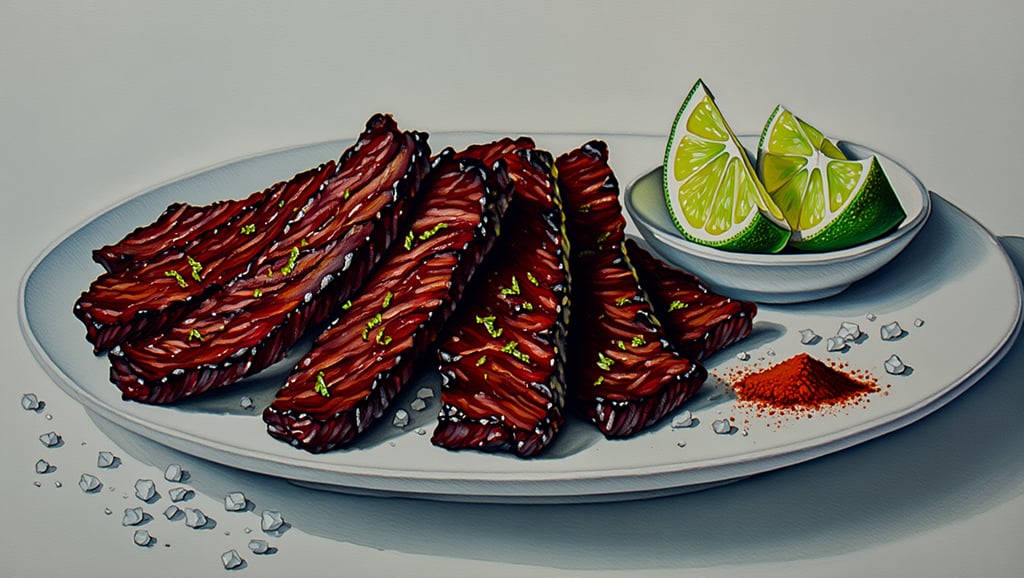
Artistic interpretation - details may differ from the actual.