
Crispy Parmesan Cloud Eggs with Avocado Cream: The Keto Morning Reimagined
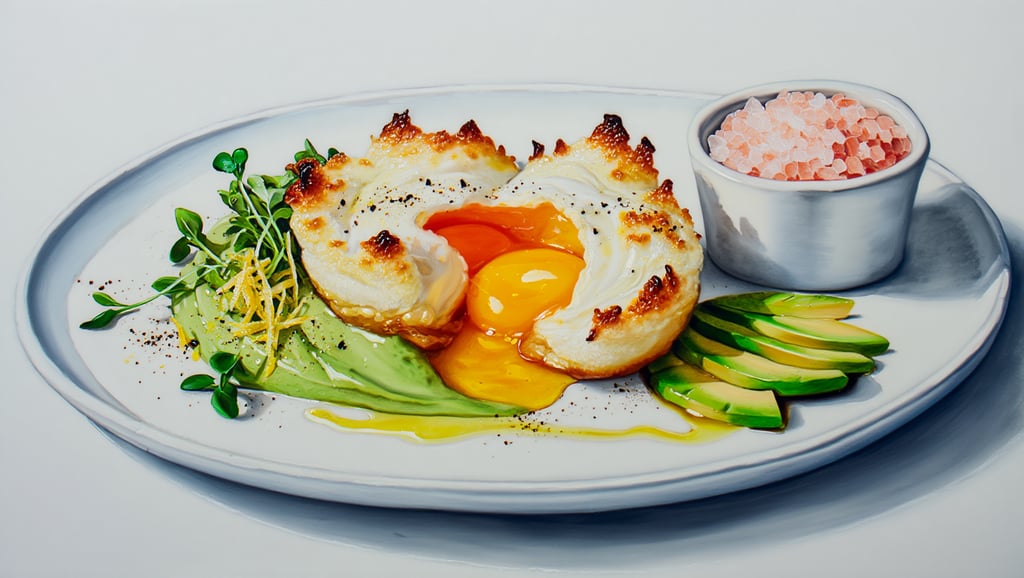
Wake up to science and style with this keto breakfast masterpiece: airy baked cloud eggs crowned with molten yolks, crisped Parmesan, and silky avocado cream. A visually striking, metabolically sharp way to start your day without a single gram of compromise.
THOUGHT FOR FOODNUTRITIONRECIPESBREAKFASTSKETO & LOW-CARB

Ingredients
4 large free-range eggs, separated
30 g freshly grated Parmesan cheese
1 ripe avocado
1 tablespoon extra virgin olive oil
Juice of half a lemon
Sea salt and cracked black pepper
½ teaspoon smoked paprika (optional)
Microgreens or chive tips, for garnish
Method
Preheat your oven to 190°C and line a baking sheet with parchment paper.
Beat the egg whites until stiff peaks form. Gently fold in the grated Parmesan and a pinch of black pepper.
Spoon four mounds of the mixture onto the baking sheet, creating a small well in the centre of each.
Bake for 4–5 minutes until lightly golden. Remove from the oven, gently drop an egg yolk into each well, and return to bake for another 3–4 minutes, just until the yolks are glossy and soft.
While baking, blend the avocado with olive oil, lemon juice, salt, and smoked paprika until velvety smooth. Adjust seasoning to taste.
Plate the cloud eggs atop a smear of avocado cream, scatter microgreens, and finish with a drizzle of olive oil and a pinch of sea salt.
The Science of the Dish
Every forkful of this breakfast is a biochemical love letter to ketosis and neuroprotection.
Eggs:
The foundation of the dish, eggs supply complete protein and choline, which enhances neurotransmitter synthesis, particularly acetylcholine, vital for cognitive function and memory (Zeisel, 2000). The yolk’s healthy fats also support sustained satiety and steady blood sugar, critical for maintaining ketosis (Volek & Phinney, 2011).
Parmesan:
This aged cheese is rich in calcium and short-chain fatty acids (SCFAs) derived from bacterial fermentation, promoting gut health and providing an efficient energy substrate for colonocytes (Ríos-Covián et al., 2016). Its umami profile helps balance flavour intensity while delivering negligible carbohydrates.
Avocado:
A staple of the ketogenic palette, avocado contributes oleic acid and monounsaturated fats that improve lipid profiles and support mitochondrial efficiency (Praagman et al., 2016). Its potassium content counteracts keto-associated electrolyte loss, supporting cardiovascular stability.
Olive Oil:
Beyond its culinary charm, extra virgin olive oil provides phenolic compounds like hydroxytyrosol, known to reduce oxidative stress and inflammation at the endothelial level (Widmer et al., 2013).
The overall composition delivers a perfect macronutrient ratio for ketosis: high in fats that fuel beta-oxidation, moderate in protein to sustain muscle repair, and nearly devoid of carbohydrates. A dish that tastes like indulgence but behaves like precision-engineered nutrition.
Nutritional Overview
(per serving, approximate)
Calories: 340 kcal
Protein: 16 g
Fat: 30 g
Carbohydrates: 3 g
Fibre: 1 g
Key Nutrients: Choline, Oleic Acid, Hydroxytyrosol, Potassium, Vitamin E
References
Ríos-Covián, D., et al. (2016). Intestinal short chain fatty acids and their link with diet and human health. Frontiers in Microbiology, 7, 185.
Praagman, J., et al. (2016). The association between dietary fatty acids and the risk of type 2 diabetes. Diabetes Care, 39(6), 1015–1022.
Volek, J. S., & Phinney, S. D. (2011). The Art and Science of Low Carbohydrate Living. Beyond Obesity LLC.
Widmer, R. J., et al. (2013). Beneficial effects of polyphenol-rich olive oil in cardiovascular disease. Progress in Cardiovascular Diseases, 55(3), 314–322.
Zeisel, S. H. (2000). Choline: An essential nutrient for public health. Nutrition Reviews, 58(6), 193–201.
Artistic interpretation - details may differ from the actual.