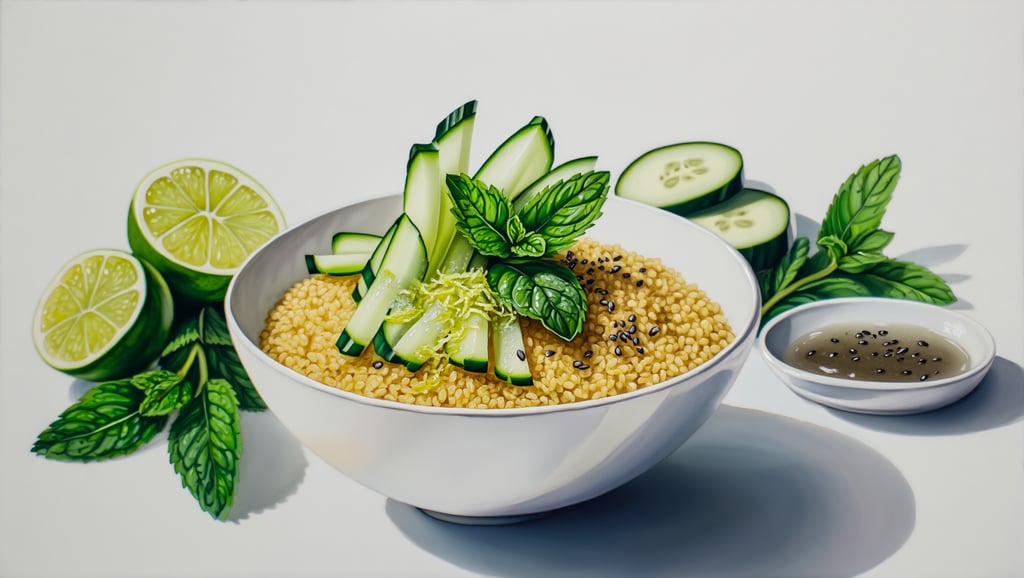
Cucumber–Mint Millet Bowl with Lime and Chia: The Cool Logic of Anti-Inflammation
A refreshingly bright anti-inflammatory breakfast that blends cooked millet, cucumber, mint, lime, and chia for a hydrating and alkalising start. Light yet nutrient-dense, this bowl is the edible equivalent of a deep breath on a summer morning: cool, crisp, and scientifically soothing.
THOUGHT FOR FOODNUTRITIONRECIPESANTI-INFLAMMATORYBREAKFASTSMEDITERRANEAN DIET
Nutritional Overview
(per serving)
Calories: 290 kcal
Protein: 8 g
Fat: 9 g
Carbohydrates: 42 g
Fibre: 7 g
Sugars: 3 g
(Values approximate; based on cooked millet and unsweetened almond milk.)
Ingredients
(Serves 2)
For the Base
½ cup millet, rinsed
1 cup water
1 cup unsweetened almond milk
1 tsp chia seeds
Pinch of sea salt
For the Topping
½ cucumber, thinly sliced into ribbons or half-moons
Juice and zest of 1 lime
2 tbsp fresh mint leaves, finely chopped
1 tsp raw honey or maple syrup (optional)
1 tbsp chia seeds (for garnish)
1 tbsp toasted pumpkin or sunflower seeds
Method
1. Cook with calm:
In a small saucepan, combine millet, almond milk, water, and salt. Bring to a gentle simmer and cook for 20 minutes until tender and creamy. Stir occasionally to prevent sticking.
2. Cool and combine:
Allow to rest for 5 minutes. Stir in chia seeds and a drizzle of honey if desired. The chia will slightly thicken the mix, adding a pleasant gel-like texture.
3. Layer with clarity:
Transfer to bowls and top with cucumber, mint, lime juice, and zest. Finish with an extra sprinkle of chia and toasted seeds. Serve slightly chilled or at room temperature.
The Science of the Dish
Millet (Panicum miliaceum):
An ancient grain high in magnesium, phenolic acids, and flavonoids, millet helps lower systemic inflammation by modulating cytokine activity (Ren et al., 2016). Its prebiotic fibres support gut integrity, an essential foundation for reducing chronic inflammation.
Cucumber (Cucumis sativus):
Low in calories yet high in hydration, cucumbers contain cucurbitacins - bioactive compounds that exhibit anti-inflammatory and anticancer properties (Kaushik et al., 2015). Their high silica and potassium content also supports connective tissue health and electrolyte balance.
Mint (Mentha spicata):
Mint’s menthol and rosmarinic acid act as mild anti-inflammatories by inhibiting leukotriene production and easing smooth muscle tension (McKay & Blumberg, 2006). The aromatic oils also stimulate the vagus nerve, helping to induce calm and improve digestion.
Lime (Citrus aurantiifolia):
Rich in vitamin C and flavonoids like hesperidin, lime enhances collagen synthesis and reduces oxidative stress (Marzouk et al., 2009). Its citric acid content promotes alkalinity in the body, helping counteract the effects of a high-inflammatory diet.
Chia Seeds (Salvia hispanica):
Chia’s alpha-linolenic acid (ALA) and polyphenols offer potent anti-inflammatory effects, particularly in reducing C-reactive protein levels (Nieman et al., 2009). Their mucilaginous fibre supports hydration, slows glucose absorption, and promotes a balanced microbiome.
Pumpkin Seeds (Cucurbita pepo):
Packed with magnesium, zinc, and plant-based omega-3s, pumpkin seeds provide both anti-inflammatory and antioxidant effects (Rios et al., 2018). They also support nervous system and muscle function, making this breakfast both brain- and body-friendly.
References
Kaushik, U., Aeri, V., & Mir, S. R. (2015). Cucurbitacins: An insight into medicinal leads from nature. Pharmacognosy Reviews, 9(17), 12–18.
Marzouk, B., Marzouk, Z., Haloui, E., Fenina, N., Bouraoui, A., & Aouni, M. (2009). Anti-inflammatory and analgesic activities of Citrus aurantiifolia leaves and fruit peel extracts. Journal of Food, Agriculture & Environment, 7(1), 54–58.
McKay, D. L., & Blumberg, J. B. (2006). A review of the bioactivity and potential health benefits of peppermint tea (Mentha piperita L.). Phytotherapy Research, 20(8), 619–633.
Nieman, D. C., Gillitt, N. D., Meaney, M. P., John, C., Knab, A. M., Shanely, R. A., & Cialdella-Kam, L. (2009). Chia seed supplementation and disease risk factors in overweight women. Nutrition Research, 29(6), 414–418.
Ren, X., et al. (2016). Dietary millet bran oil reduces inflammatory response and oxidative stress in rats. Journal of Cereal Science, 70, 165–171.
Rios, J. L., Recio, M. C., Giner, R. M., & Manez, S. (2018). An update review of safflower and pumpkin seed as functional foods with potential benefits on inflammation. Food & Function, 9(3), 1281–1298.
Artistic interpretation - details may differ from the actual.