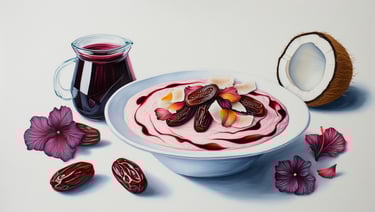
Hibiscus Rice Pudding with Coconut and Date Petals: A Floral Alchemy of Calm and Clarity
A soothing anti-inflammatory rice pudding steeped in hibiscus tea, enriched with coconut milk and sweetened naturally with dates. This rosy-toned breakfast or dessert harmonises antioxidants, healthy fats, and minerals into one serene bowl of edible
THOUGHT FOR FOODNUTRITIONRECIPESANTI-INFLAMMATORYBREAKFASTSPLANT-BASEDVEGAN
Nutritional Overview
(per serving)
Calories: 390 kcal
Protein: 6 g
Fat: 14 g
Carbohydrates: 62 g
Fibre: 5 g
Sugars: 24 g
(Values approximate; based on full-fat coconut milk and 3 dates per serving.)
Ingredients
(Serves 2)
½ cup short-grain or jasmine rice
1 ½ cups unsweetened coconut milk
½ cup strong brewed hibiscus tea (1 tbsp dried petals steeped in ½ cup hot water)
3 Medjool dates, finely chopped
1 tsp coconut sugar (optional)
¼ tsp vanilla extract or cardamom powder
Pinch of sea salt
1 tbsp unsweetened coconut flakes (toasted)
Optional garnish: edible flowers, extra dates, or hibiscus syrup drizzle
Method
1. Brew the bloom:
Steep dried hibiscus petals in hot water for 10 minutes. Strain and set the ruby-hued liquid aside.
2. Simmer the soul:
In a small pot, combine rice, coconut milk, hibiscus tea, salt, and chopped dates. Simmer gently over low heat, stirring often to prevent sticking.
3. Infuse and thicken:
After 15–20 minutes, as the rice becomes creamy and tender, stir in vanilla or cardamom. The mixture should thicken to a luxurious pudding texture.
4. Toast and finish:
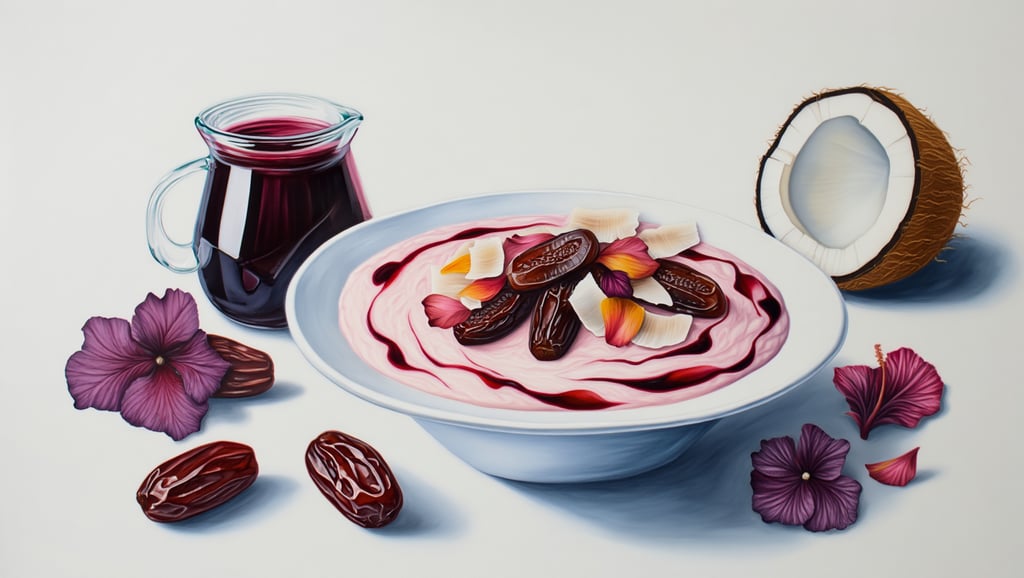
In a dry pan, lightly toast coconut flakes until golden. Spoon pudding into bowls, top with toasted coconut, additional dates, and a few dried hibiscus petals for visual and aromatic flourish.
5. Serve warm or chilled:
This dish blooms beautifully either way: warm for comfort, chilled for calm clarity.
The Science of the Dish
Hibiscus (Hibiscus sabdariffa):
Hibiscus is rich in anthocyanins (specifically delphinidin-3-sambubioside and cyanidin-3-sambubioside) which exhibit potent antioxidant and anti-inflammatory effects by inhibiting lipid peroxidation and reducing TNF-α expression (Hopkins et al., 2013). Studies also link hibiscus tea to improved blood pressure and lipid profiles (McKay et al., 2010).
Coconut Milk (Cocos nucifera):
Provides medium-chain triglycerides (MCTs), which enhance energy metabolism and have shown anti-inflammatory benefits by modulating gut microbiota composition (Nagao & Yanagita, 2010). Its lauric acid content contributes to antimicrobial and immune-supportive properties.
Rice (Oryza sativa):
White rice, though simple, becomes a gentle vehicle for bioactive compounds in this preparation. When cooked in polyphenol-rich liquids, it enhances the bioavailability of certain antioxidants while remaining easily digestible - a boon for sensitive digestive systems.
Dates (Phoenix dactylifera):
Natural sweetness from dates provides fibre, magnesium, and polyphenols such as ferulic acid and caffeic acid. These compounds have been shown to reduce oxidative stress and inflammation markers in human trials (Al-Farsi & Lee, 2008).
Coconut Flakes:
Toasting enhances flavour through Maillard reactions while maintaining mineral density, particularly manganese, essential for antioxidant enzyme function (superoxide dismutase).
Vanilla/Cardamom:
Both contain volatile oils (vanillin, eucalyptol) with neuroprotective and anti-inflammatory potential, supporting calmness and mental clarity.
References
Al-Farsi, M., & Lee, C. Y. (2008). Nutritional and functional properties of dates. Critical Reviews in Food Science and Nutrition, 48(10), 877–887.
Hopkins, A. L., Lamm, M. G., Funk, J. L., & Ritenbaugh, C. (2013). Hibiscus sabdariffa L. in the treatment of hypertension and hyperlipidemia: A comprehensive review. Phytotherapy Research, 27(5), 709–720.
McKay, D. L., et al. (2010). Hibiscus sabdariffa tea and blood pressure in prehypertensive and mildly hypertensive adults. Journal of Nutrition, 140(2), 298–303.
Nagao, K., & Yanagita, T. (2010). Medium-chain fatty acids: Functional lipids for the prevention and treatment of metabolic syndrome. Pharmacological Research, 61(3), 208–212.
Artistic interpretation - details may differ from the actual.