
Lavender Quinoa Bowl with Blueberry Compote and Almond Cream: The Botanical Breakfast of Serenity and Strength
A fragrant, anti-inflammatory breakfast featuring quinoa simmered with culinary lavender, layered with antioxidant-rich blueberry compote and silky almond cream. This calm yet vibrant dish harmonises floral aromatics, plant protein, and phytonutrients for a balanced start to the day.
THOUGHT FOR FOODNUTRITIONRECIPESANTI-INFLAMMATORYBREAKFASTSPLANT-BASEDVEGAN
Nutritional Overview
(per serving)
Calories: 340 kcal
Protein: 10 g
Fat: 12 g
Carbohydrates: 48 g
Fibre: 7 g
Sugars: 14 g
(Values approximate; based on unsweetened almond milk and maple-sweetened compote.)
Ingredients
(Serves 2)
For the Lavender Quinoa
½ cup white quinoa, rinsed
1 cup unsweetened almond milk
½ cup water
1 tsp culinary-grade dried lavender buds
1 tsp maple syrup or raw honey
Pinch of sea salt
For the Blueberry Compote
1 cup fresh or frozen blueberries
1 tsp lemon juice
1 tsp chia seeds
1 tsp maple syrup (optional)
For the Almond Cream
2 tbsp almond butter
2 tbsp warm water
¼ tsp vanilla extract
To Serve
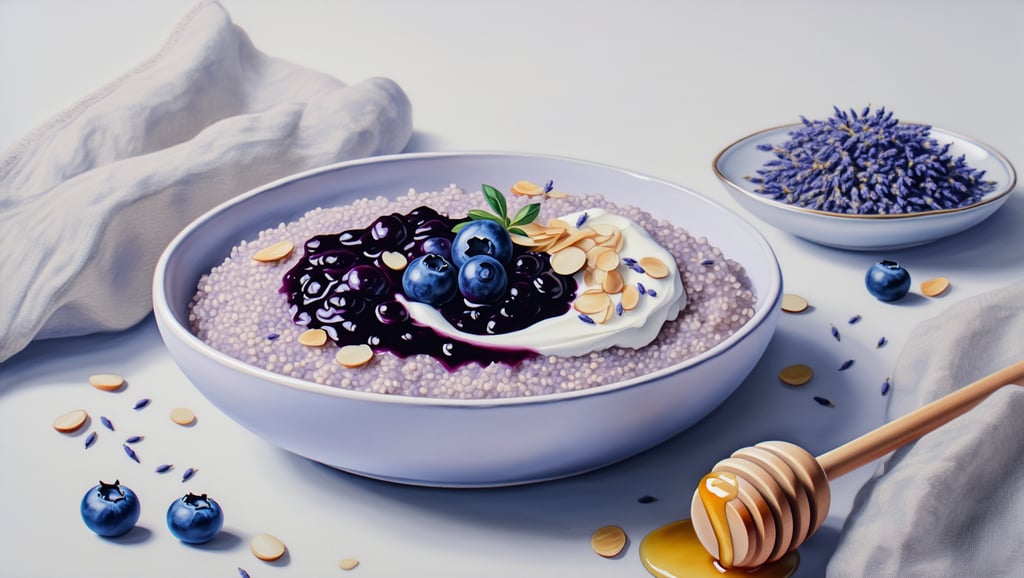
Fresh blueberries, toasted almonds, and edible lavender buds
Method
1. Infuse the base:
In a small saucepan, combine almond milk, water, and lavender. Warm gently until aromatic, then strain out the buds. Return the liquid to the pan.
2. Simmer the quinoa:
Add rinsed quinoa, salt, and a drizzle of maple syrup to the lavender-infused milk. Cook over low heat for 15–20 minutes until tender and creamy, stirring occasionally.
3. Make the compote:
Meanwhile, simmer blueberries and lemon juice in a small pan until they burst and form a glossy sauce. Stir in chia seeds to thicken, adding maple syrup if desired.
4. Blend the almond cream:
Whisk almond butter, warm water, and vanilla until smooth and pourable. Adjust consistency with extra water if needed.
5. Assemble the bowl:
Spoon the lavender quinoa into bowls, swirl with blueberry compote, drizzle with almond cream, and top with almonds, blueberries, and a few lavender buds.
The Science of the Dish
Lavender (Lavandula angustifolia):
Lavender contains linalool and linalyl acetate, compounds known for their calming and anti-inflammatory properties. These phytochemicals interact with GABA receptors, supporting relaxation while reducing inflammatory cytokine release (Koulivand et al., 2013).
Quinoa (Chenopodium quinoa):
A complete plant protein rich in lysine and methionine, quinoa also provides flavonoids like quercetin and kaempferol, both with potent antioxidant and anti-inflammatory effects (Tang et al., 2015). Its low glycaemic load stabilises blood sugar and energy throughout the morning.
Blueberries (Vaccinium corymbosum):
Blueberries are celebrated for their anthocyanins (particularly malvidin and delphinidin) that reduce oxidative stress and support vascular health (Kalt et al., 2020). Regular intake correlates with improved cognitive performance and lower systemic inflammation.
Almonds (Prunus dulcis):
Rich in vitamin E, magnesium, and healthy fats, almonds improve lipid metabolism and help regulate inflammatory markers like C-reactive protein (Chen et al., 2019). When transformed into almond cream, they add creamy texture and nutrient density without dairy.
Chia Seeds (Salvia hispanica):
These tiny omega-3 powerhouses provide alpha-linolenic acid, which supports cell membrane function and lowers pro-inflammatory eicosanoid synthesis (Ulbricht et al., 2009).
References
Chen, C. Y., et al. (2019). Almond consumption improves cardiometabolic risk factors in adults. Nutrients, 11(5), 1041.
Kalt, W., Cassidy, A., Howard, L. R., Krikorian, R., Stull, A. J., Tremblay, F., & Zamora-Ros, R. (2020). Recent research on the health benefits of blueberries and their anthocyanins. Advances in Nutrition, 11(2), 224–236.
Koulivand, P. H., Khaleghi Ghadiri, M., & Gorji, A. (2013). Lavender and the nervous system. Evidence-Based Complementary and Alternative Medicine, 2013, 681304.
Tang, Y., Li, X., Zhang, B., Chen, P. X., Liu, R., & Tsao, R. (2015). Characterisation of phenolics, betanins and antioxidant activities in seeds of three Chenopodium quinoa varieties. Food Chemistry, 166, 380–388.
Ulbricht, C., et al. (2009). Chia (Salvia hispanica): A systematic review by the Natural Standard Research Collaboration. Reviews on Recent Clinical Trials, 4(3), 168–174.
Artistic interpretation - details may differ from the actual.