Lemon Ricotta Soufflé Omelette: Keto’s Fluffiest Ode to Fats and Finesse
A light, tangy, cloudlike creation that turns breakfast into performance art. This Keto Lemon Ricotta Soufflé Omelette balances rich fats with bright acidity for a dish that is as metabolically sharp as it is utterly decadent.
THOUGHT FOR FOODNUTRITIONRECIPESBREAKFASTSKETO & LOW-CARB

Ingredients
4 large free-range eggs, separated
60 g (¼ cup) whole milk ricotta
15 g (1 tbsp) unsalted butter, plus extra for greasing
5 ml (1 tsp) freshly squeezed lemon juice
1 tsp finely grated lemon zest
A pinch of sea salt
A few fresh thyme leaves (optional)
Method
Preheat your oven to 180°C (350°F). Lightly butter a small oven-safe pan or baking dish.
In a bowl, whisk the egg yolks with ricotta, lemon juice, zest, and a pinch of salt until smooth.
In a separate bowl, beat the egg whites until soft peaks form.
Gently fold the whites into the yolk mixture, keeping the texture light and airy.
Melt the butter in the pan over medium heat, swirl to coat, and pour in the mixture. Cook for 1–2 minutes until the base begins to set.
Transfer to the oven and bake for 8–10 minutes until puffed and golden.
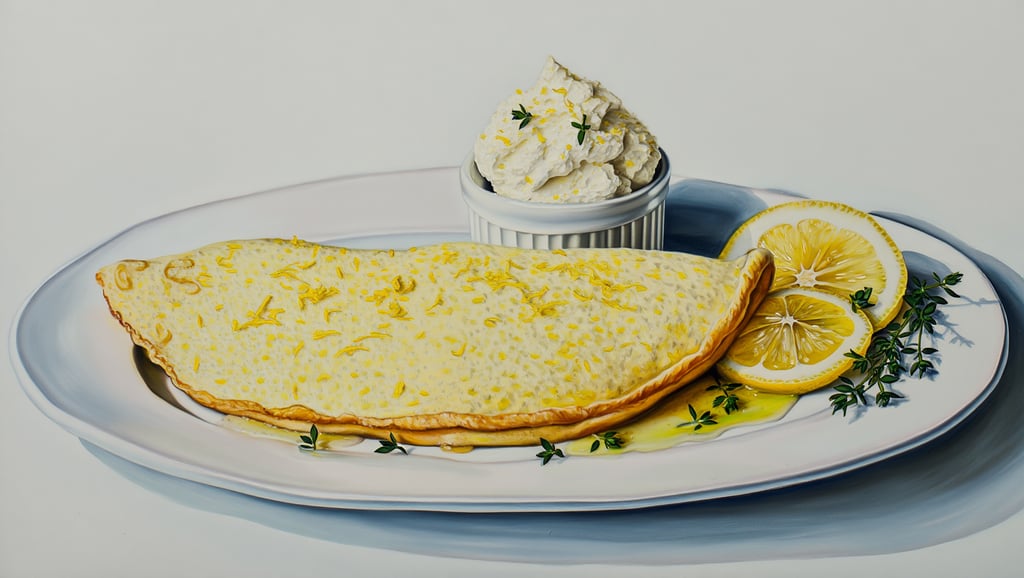
Serve immediately with a small spoonful of whipped ricotta and a drizzle of melted thyme butter.
Nutritional Overview
(per serving, approximate)
Calories: 330 kcal
Protein: 18 g
Fat: 28 g
Carbohydrates: 3 g
Fibre: 0 g
Key Nutrients: Choline, Vitamin D, Calcium, Conjugated Linoleic Acid (CLA), Monounsaturated fats
The Science of the Dish
Eggs:
Eggs are the biochemical scaffolding of keto cuisine. They supply choline, an essential nutrient that maintains liver function and lipid metabolism (Zeisel, 2000). Their leucine content supports muscle repair, while their fat profile contributes to satiety and steady energy release, particularly valuable in maintaining ketosis (Volek & Phinney, 2011).
Ricotta:
Unlike denser cheeses, ricotta offers a delicate protein matrix formed by whey proteins such as β-lactoglobulin. These proteins improve amino acid bioavailability and gut peptide signalling (Boirie et al., 1997). Ricotta’s modest lactose content keeps it keto-compliant in small portions, while providing calcium and vitamin D for bone health.
Lemon:
The citric acid in lemon juice aids digestion and enhances mineral absorption (Heaney et al., 1989). Meanwhile, the zest contains limonene, a monoterpene compound associated with antioxidant and lipid-lowering effects (Sun, 2007). In the context of a high-fat meal, lemon’s acidity balances the palate while supporting bile flow, aiding fat digestion (Friedrich et al., 2015).
Butter:
Far from a villain, butter in keto functions as an efficient energy source composed largely of butyric acid, a short-chain fatty acid that supports colonic health (Canani et al., 2011). Grass-fed butter further provides conjugated linoleic acid (CLA), which may support fat metabolism and cardiovascular function (Bhattacharya et al., 2006).
Thyme (optional):
Thymol and carvacrol, the principal bioactives in thyme, show antimicrobial and anti-inflammatory properties that benefit both digestion and respiratory health (Marchese et al., 2016).
Altogether, this soufflé is a masterclass in metabolic synergy. Each component contributes to energy efficiency, hormonal balance, and nutrient absorption. It is breakfast as architecture: light, structured, and beautifully engineered for both flavour and function.
References
Bhattacharya, A., et al. (2006). Conjugated linoleic acid and its role in human health and disease. Journal of the American College of Nutrition, 25(2), 126–132.
Boirie, Y., et al. (1997). Slow and fast dietary proteins differently modulate postprandial protein accretion. Proceedings of the National Academy of Sciences, 94(26), 14930–14935.
Canani, R. B., et al. (2011). Potential beneficial effects of butyrate in intestinal and extraintestinal diseases. World Journal of Gastroenterology, 17(12), 1519–1528.
Friedrich, M., et al. (2015). Bile acids and the gut microbiome: Effects on lipid metabolism and inflammation. Current Opinion in Lipidology, 26(1), 62–68.
Heaney, R. P., et al. (1989). Effects of food on calcium absorption. American Journal of Clinical Nutrition, 49(2), 372–376.
Marchese, A., et al. (2016). Antimicrobial and anti-inflammatory activities of thymol and carvacrol: A review. Microbial Pathogenesis, 99, 59–67.
Sun, J. (2007). D-Limonene: Safety and clinical applications. Alternative Medicine Review, 12(3), 259–264.
Volek, J. S., & Phinney, S. D. (2011). The Art and Science of Low Carbohydrate Living. Beyond Obesity LLC.
Zeisel, S. H. (2000). Choline: An essential nutrient for public health. Nutrition Reviews, 58(6), 193–201.
Artistic interpretation - details may differ from the actual.