
Mediterranean Baked Eggs with Spinach, Feta, and Chilli Oil: Sunlit Alchemy in a Skillet
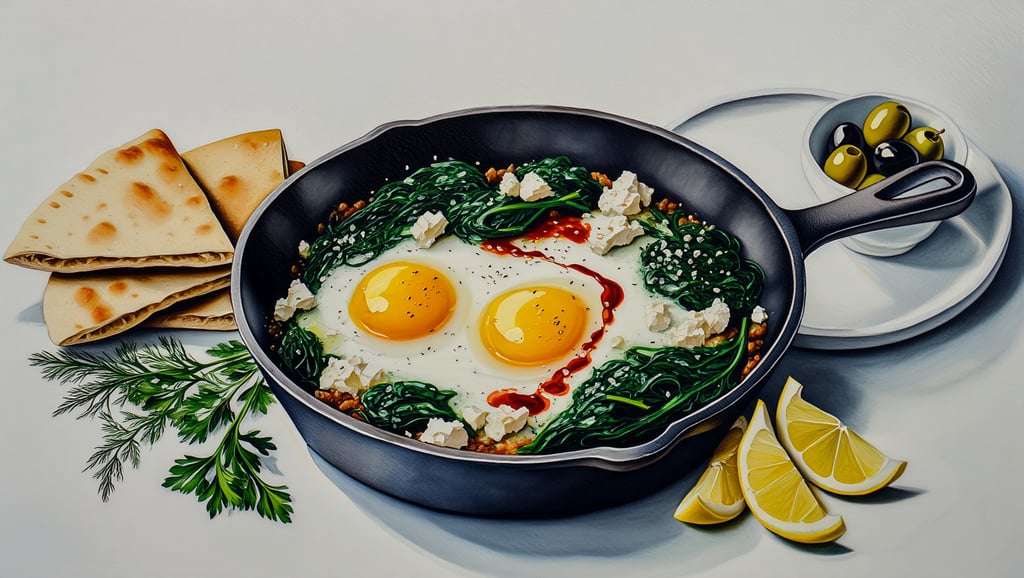
A refined twist on the Mediterranean morning: baked eggs nestled in garlicky spinach and topped with tangy feta and shimmering chilli oil. This high-protein, heart-healthy dish celebrates the balance of indulgence and science that defines the region’s most enduring culinary wisdom.
THOUGHT FOR FOODNUTRITIONRECIPESBREAKFASTSMEDITERRANEAN DIET
Ingredients
4 large free-range eggs
2 cups baby spinach leaves
1 tablespoon extra virgin olive oil
1 small garlic clove, finely sliced
50 g Greek feta cheese, crumbled
1 teaspoon chilli flakes (or more to taste)
1 tablespoon olive oil (for chilli oil)
Sea salt and freshly cracked black pepper
Lemon wedges and warm pita to serve
Method
Preheat the oven to 190°C.
In a small skillet, heat one tablespoon of olive oil and sauté the sliced garlic until fragrant. Add the spinach and cook until just wilted. Season lightly with salt and pepper.
Spread the spinach mixture evenly across the base of the skillet and make four small wells. Crack an egg into each well.
Sprinkle crumbled feta across the surface and place the skillet in the oven for 8–10 minutes, or until the egg whites are set but the yolks remain soft.
Meanwhile, warm one tablespoon of olive oil in a pan and stir in the chilli flakes until they infuse the oil with a deep amber hue.
Drizzle the warm chilli oil over the baked eggs before serving, and garnish with a squeeze of lemon.
Serve immediately with warm pita or crusty whole-grain bread for dipping.
The Science of the Dish
Every forkful of this skillet offers a biochemical sonnet to cardiovascular and neurological health. The eggs are a nutrient powerhouse, delivering complete protein, choline for brain function, and lutein and zeaxanthin, carotenoids that protect the eyes from oxidative stress (Johnson, 2014). Spinach adds folate, nitrates, and vitamin K1, each critical for vascular elasticity and cellular regeneration (Lidder & Webb, 2013).
The feta contributes calcium and bioavailable conjugated linoleic acid (CLA), which has been linked to improved lipid metabolism and anti-inflammatory effects (Pariza, 2004). Meanwhile, the olive oil and chilli oil duo provide monounsaturated fats and capsaicin. Capsaicin, the fiery molecule behind chilli’s heat, stimulates thermogenesis and may reduce systemic inflammation by modulating cytokine pathways (McCarty et al., 2015).
Together, these ingredients harmonise into a nutritionally elegant equation where every texture and temperature shift carries measurable benefit. It is no coincidence that such dishes anchor the Mediterranean diet’s reputation for longevity and mental acuity (Sofi et al., 2010).
Nutritional Overview
(per serving, approximate)
Calories: 320 kcal
Protein: 18 g
Fat: 25 g
Carbohydrates: 6 g
Fibre: 2 g
Key Nutrients: Choline, Lutein, Oleic Acid, Capsaicin, Calcium
References
Johnson, E. J. (2014). Role of lutein and zeaxanthin in visual and cognitive function throughout life. Nutrients, 6(12), 4971–4982.
Lidder, S., & Webb, A. J. (2013). Vascular effects of dietary nitrate (as found in green leafy vegetables). Nitric Oxide, 27, 61–67.
McCarty, M. F., et al. (2015). Capsaicin may have important potential for promoting vascular and metabolic health. Open Heart, 2(1), e000262.
Pariza, M. W. (2004). Conjugated linoleic acid: Is it beneficial for humans? Current Opinion in Clinical Nutrition and Metabolic Care, 7(6), 597–603.
Sofi, F., et al. (2010). Accruing evidence on benefits of adherence to the Mediterranean diet on health: An updated systematic review and meta-analysis. American Journal of Clinical Nutrition, 92(5), 1189–1196.
Artistic interpretation - details may differ from the actual.