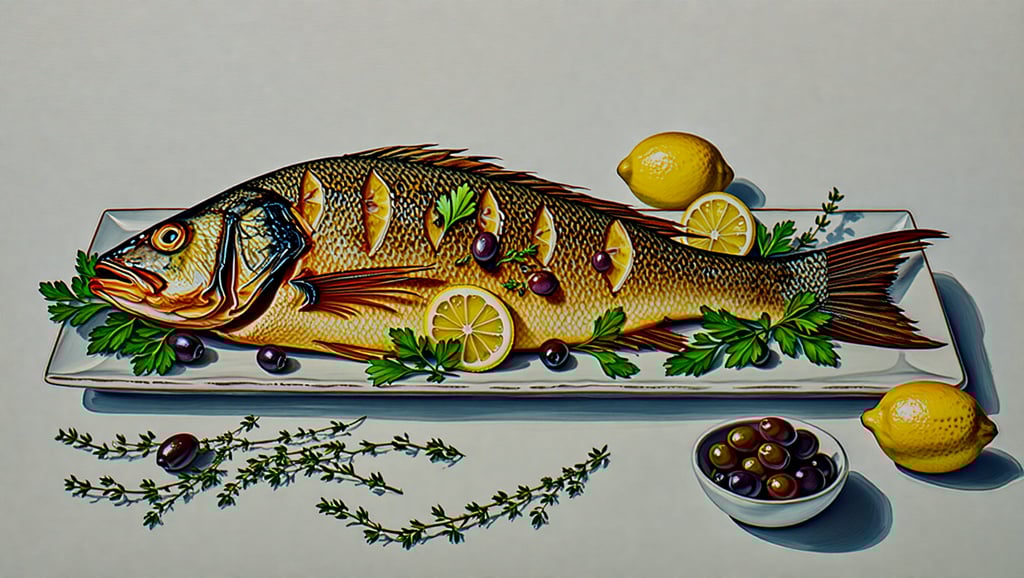
Mediterranean Baked Sea Bass with Lemon, Olives, and Herbs: Elegance from the Sea
A Mediterranean sea bass baked with lemon, olives, and herbs. A heart-healthy, omega-3 rich dish that blends simplicity, science, and seaside charm on one white plate.
THOUGHT FOR FOODNUTRITIONRECIPESMEDITERRANEAN DIET
Why Sea Bass Is the Pearl of Mediterranean Cooking
Sea bass, often called branzino in Italian kitchens, has a long-standing place in Mediterranean tables from the coasts of Greece to Spain. Its flesh is delicate yet firm, with a mild flavour that welcomes the company of lemon, olives, and fragrant herbs. Beyond the plate, sea bass represents a central tenet of the Mediterranean diet: seafood as the primary animal protein, balancing flavour with health benefits.
The science is as impressive as the taste. Sea bass is rich in omega-3 fatty acids, known to reduce inflammation and support cardiovascular health (Mozaffarian & Rimm, 2006). The supporting cast is no less brilliant: lemon brings vitamin C and brightness, olives provide monounsaturated fats and antioxidants, while herbs like thyme and parsley add phytonutrients. The result is a dish that is as good for the heart as it is for the taste buds.
Recipe: Mediterranean Baked Sea Bass with Lemon, Olives, and Herbs
Ingredients
(serves 4)
For the fish
2 whole sea bass (about 600 g / 1.3 lb each), cleaned and scaled
2 tbsp extra-virgin olive oil
1 lemon, thinly sliced
100 g (3.5 oz) mixed olives (green and black), pitted
2 garlic cloves, thinly sliced
4 sprigs fresh thyme
2 tbsp fresh parsley, chopped
½ tsp sea salt
¼ tsp black pepper
Method
Preheat the oven: Set to 200°C (400°F). Line a baking tray with parchment or lightly oil a white ceramic baking dish.
Prepare the fish: Rinse sea bass and pat dry. Score the skin lightly on both sides. Rub inside and out with olive oil, salt, and pepper.
Stuff with aromatics: Place lemon slices, garlic, and thyme sprigs inside the cavity of each fish.
Bake with style: Arrange fish on the dish, scatter olives around, and top with a few extra lemon slices. Bake for 20–25 minutes until flesh is opaque and flakes easily.
Serve with flair: Transfer fish to a white serving platter. Garnish with chopped parsley and a drizzle of olive oil.
Nutritional Information
(per serving)
Calories: 280 kcal
Protein: 34 g
Fat: 14 g (of which 3 g saturated)
Carbohydrates: 3 g
Fibre: 1 g
Sodium: 410 mg
Omega-3 fatty acids: ~1.2 g
The Science of Why This Dish Works
Sea bass and omega-3s: Regular fish intake is associated with reduced cardiovascular mortality and lower risk of sudden cardiac death (Mozaffarian & Rimm, 2006).
Lemon’s vitamin C: Enhances iron absorption from the meal and contributes antioxidant protection (Carr & Maggini, 2017).
Olives’ monounsaturated fats: Linked to improved cholesterol ratios and reduced oxidative stress (Covas, 2007).
Herbs as functional flavour: Thyme and parsley contain flavonoids with anti-inflammatory and antimicrobial properties (Wojdyło et al., 2007).
This dish embodies Mediterranean elegance: simple ingredients, no excess fuss, yet layers of flavour supported by solid science.
Variations and Serving Ideas
Swap sea bass for snapper or trout if more readily available.
Add cherry tomatoes to the tray for a burst of sweetness.
Pair with a side of roasted Mediterranean vegetables or a simple couscous salad.
References
Carr, A. C., & Maggini, S. (2017). Vitamin C and immune function. Nutrients, 9(11), 1211.
Covas, M. I. (2007). Olive oil and the cardiovascular system. Pharmacological Research, 55(3), 175–186.
Mozaffarian, D., & Rimm, E. B. (2006). Fish intake, contaminants, and human health: evaluating the risks and the benefits. JAMA, 296(15), 1885–1899.
Wojdyło, A., et al. (2007). Polyphenolic compounds and antioxidant activity of selected herbs. Food Chemistry, 105(3), 940–949.
Artistic interpretation - details may differ from the actual.