
Mediterranean Cucumber–Mint Refresher: Hydration à la Hellenic
Crisp cucumber, aromatic mint, and a whisper of citrus unite in this Mediterranean Cucumber–Mint Refresher… a naturally hydrating, antioxidant-rich drink inspired by coastal living. Light, elegant, and rooted in nutritional science, it’s what the Aegean sun would taste like if it were drinkable.
THOUGHT FOR FOODNUTRITIONRECIPESMEDITERRANEAN DIETBEVERAGESPLANT-BASED
Nutritional Overview
(per serving)
Calories: 18 kcal
Protein: 0.5 g
Fat: 0 g
Carbohydrates: 4 g
Sugar: 2.5 g (naturally occurring)
Fibre: 0.5 g
(Values approximate; based on fresh produce and no added sugar.)
Ingredients
(Serves 2)
500 ml (2 cups) filtered water
½ medium cucumber, thinly sliced into ribbons
6–8 fresh mint leaves
1 tsp freshly squeezed lemon juice
1 tsp extra virgin olive oil (optional, for added mouthfeel and antioxidants)
Ice cubes to serve
Method
Assemble the infusion: Add cucumber ribbons, mint leaves, and lemon juice to a glass jug.
Add liquid luxury: Pour in filtered water, stir gently, and allow to infuse for at least 10 minutes in the refrigerator.
Optional Mediterranean twist: Add a few drops of olive oil just before serving - it creates a light emulsion that enhances texture and polyphenol content.
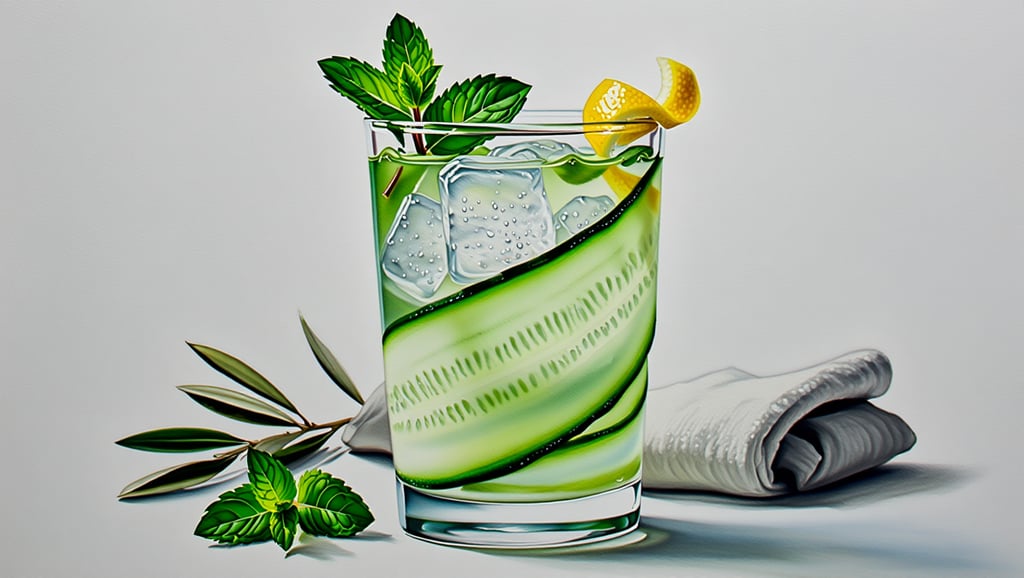
Serve chilled: Strain (if desired) and pour over ice. Garnish with mint and a cucumber curl.
The Science of the Beverage
Cucumber (Cucumis sativus):
Composed of over 95% water, cucumber provides hydrating electrolytes and phytochemicals like cucurbitacins and lignans, known for antioxidant and anti-inflammatory activity (Nema et al., 2011). It’s gentle on the digestive tract and supports healthy skin through silica and vitamin K.
Mint (Mentha spicata):
Mint offers rosmarinic acid and menthol, which have mild antispasmodic and digestive benefits. Studies link mint with reduced bloating and improved gastrointestinal comfort (Kennedy et al., 2011).
Lemon (Citrus limon):
Beyond its zesty brightness, lemon is a natural alkaliser, supporting pH balance and providing vitamin C and flavonoids like hesperidin and eriocitrin, known for antioxidant protection (González-Molina et al., 2010).
Olive Oil (Olea europaea):
Optional yet quintessentially Mediterranean, extra virgin olive oil introduces oleocanthal and hydroxytyrosol - potent anti-inflammatory compounds that mimic ibuprofen’s effects at the molecular level (Beauchamp et al., 2005). Even a teaspoon adds a velvety texture and a hint of coastal complexity.
References
Beauchamp, G. K., et al. (2005). Phytochemistry: Ibuprofen-like activity in extra-virgin olive oil. Nature, 437(7055), 45–46.
González-Molina, E., et al. (2010). Health-promoting properties of citrus flavonoids. Food & Function, 1(1), 51–58.
Kennedy, D. O., et al. (2011). Modulation of cognitive performance and mood by peppermint and ylang-ylang essential oils. International Journal of Neuroscience, 121(9), 615–623.
Nema, N. K., et al. (2011). Antioxidant and anti-inflammatory activity of Cucumis sativus fruits. International Journal of Pharmacy and Pharmaceutical Sciences, 3(3), 216–221.
Artistic interpretation - details may differ from the actual.