
Mediterranean Lamb Meatballs with Mint and Yoghurt: Rustic Elegance in Bite-Sized Form
Juicy lamb meatballs infused with mint, garlic, and spices, served with cooling yoghurt. A Mediterranean recipe that balances indulgence and heart-smart nutrition in the most stylish way.
THOUGHT FOR FOODNUTRITIONRECIPESMEDITERRANEAN DIET
Why Lamb and Mint Are a Mediterranean Match Made in Culinary Heaven
Lamb has long been a cornerstone of Mediterranean cuisines, particularly in Greece, Turkey, Morocco, and the Levant. Its robust, slightly gamey flavour pairs naturally with bright herbs, tangy yoghurt, and earthy spices. While lamb is sometimes unfairly maligned as a red meat villain, science tells a more nuanced story. When eaten in moderate portions and prepared in Mediterranean style with plenty of herbs, vegetables, and yoghurt, lamb can be both satisfying and nutritionally beneficial.
Mint and yoghurt are not mere afterthoughts here. Mint is a digestive aid with refreshing oils like menthol that soothe the gut (McKay & Blumberg, 2006). Yoghurt provides probiotics for gut health and a cooling foil to lamb’s richness. Together, the trio exemplifies Mediterranean balance: bold flavour tempered by fresh and restorative accents.
Recipe: Mediterranean Lamb Meatballs with Mint and Yoghurt
Ingredients
For the meatballs
500 g (1.1 lb) ground lamb
1 small onion, finely grated (100 g / 3.5 oz)
2 garlic cloves, minced
2 tbsp fresh mint, chopped
2 tbsp fresh parsley, chopped
1 tsp ground cumin
½ tsp ground cinnamon
½ tsp sea salt
¼ tsp black pepper
1 tbsp extra-virgin olive oil (for brushing)
For the yoghurt sauce
200 g (7 oz) plain Greek yoghurt
1 tbsp lemon juice
1 tbsp fresh mint, finely chopped
½ garlic clove, minced
Pinch of salt
Method
Preheat oven: Set to 200°C (400°F). Line a baking tray with parchment.
Mix the meatballs: In a large bowl, combine lamb, onion, garlic, mint, parsley, cumin, cinnamon, salt, and pepper. Mix gently with your hands until just combined.
Shape and brush: Form mixture into 16 small meatballs. Place on the tray and brush lightly with olive oil.
Bake until golden: Roast for 18–20 minutes until cooked through and slightly crisped on the outside.
Prepare yoghurt sauce: While meatballs bake, whisk yoghurt with lemon juice, mint, garlic, and salt in a small bowl.
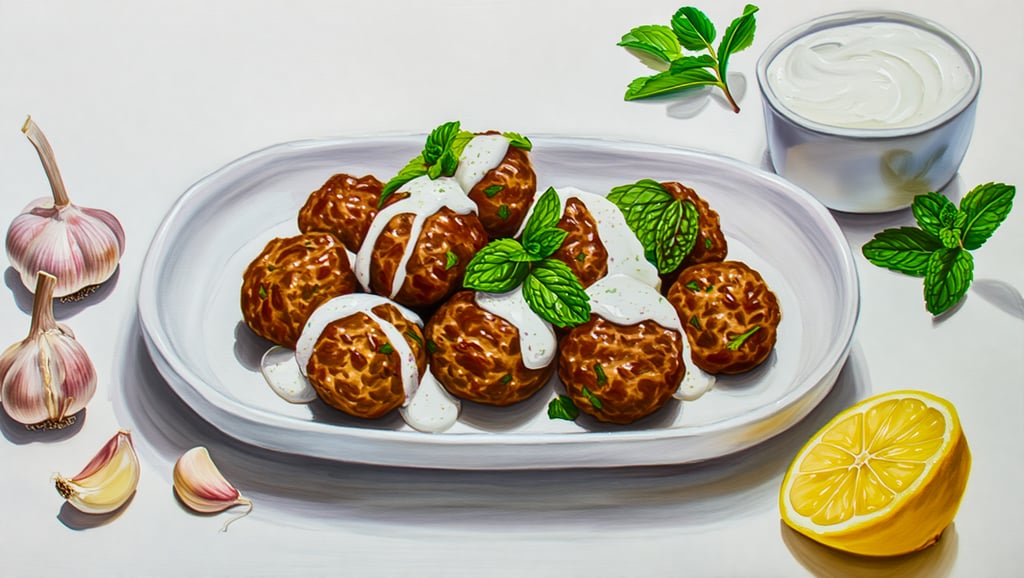
Serve with flair: Arrange meatballs on a white platter, drizzle with yoghurt sauce, and garnish with fresh mint leaves.
Nutritional Information
(per serving, 4 servings)
Calories: 310 kcal
Protein: 24 g
Fat: 22 g (of which 9 g saturated)
Carbohydrates: 4 g
Fibre: 1 g
Sodium: 280 mg
Vitamin B12: 70% DV
Zinc: 35% DV
The Science of Why This Dish Works
Lamb’s micronutrient density: Rich in vitamin B12, iron, and zinc, lamb supports red blood cell formation, immune function, and energy metabolism (Williamson et al., 2005).
Moderation matters: Research suggests that lean cuts of lamb, when eaten occasionally within a Mediterranean diet, do not carry the same risks as processed red meat (Wyness, 2016).
Mint’s digestive benefits: Peppermint oils can reduce gastrointestinal discomfort and support digestion (McKay & Blumberg, 2006).
Yoghurt’s probiotic role: Fermented dairy products improve gut microbiota diversity and may reduce risk of metabolic diseases (Marco et al., 2017).
Spice synergy: Cumin and cinnamon bring antioxidant and anti-inflammatory compounds, enhancing flavour while contributing subtle health benefits (Shan et al., 2005).
This dish is both rustic and refined. It is proof that the Mediterranean diet does not shy away from meat, but instead frames it with herbs, spices, and accompaniments that keep the overall balance intact.
Variations and Serving Ideas
Swap lamb for ground turkey or chicken for a leaner twist.
Serve meatballs in warm pita with shredded lettuce, cucumber, and tomatoes.
Pair with roasted aubergine or a bulgur salad for a full mezze-style spread.
References
Marco, M. L., et al. (2017). Health benefits of fermented foods: microbiota and beyond. Current Opinion in Biotechnology, 44, 94–102.
McKay, D. L., & Blumberg, J. B. (2006). A review of the bioactivity and potential health benefits of peppermint tea. Phytotherapy Research, 20(8), 619–633.
Shan, B., et al. (2005). Antioxidant capacity of 26 spice extracts and characterization of their phenolic constituents. Journal of Agricultural and Food Chemistry, 53(20), 7749–7759.
Williamson, C. S., et al. (2005). Nutritional properties of lamb. Nutrition Bulletin, 30(3), 205–212.
Wyness, L. (2016). The role of red meat in the diet: nutrition and health benefits. Proceedings of the Nutrition Society, 75(3), 227–232.
Artistic interpretation - details may differ from the actual.