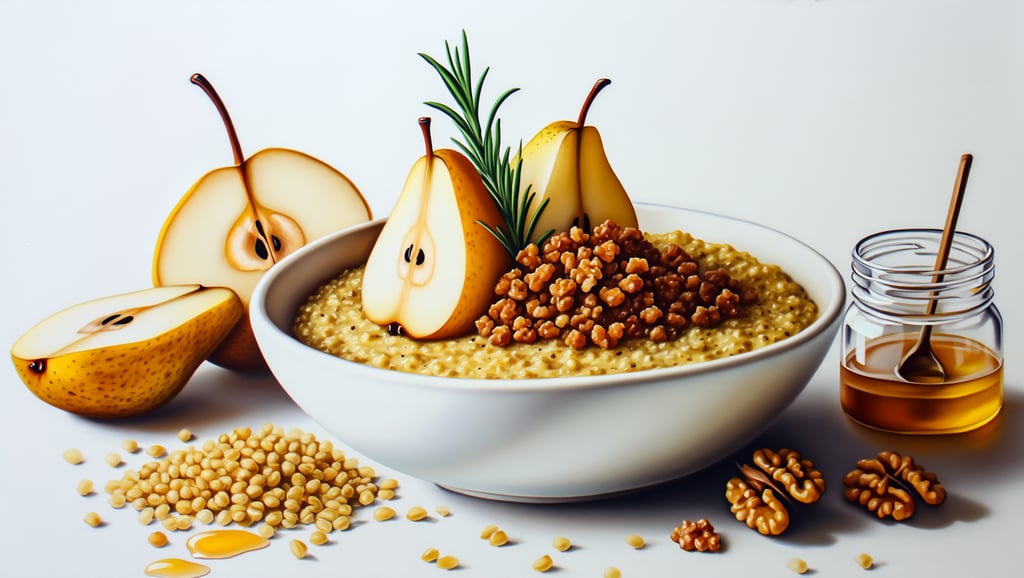
Rosemary–Pear Millet Porridge with Walnut Crumble: The Botanist’s Breakfast Sonata
A fragrant anti-inflammatory breakfast of creamy millet infused with rosemary, poached pear, and toasted walnut crumble. This subtly sweet, savoury–aromatic creation nourishes the mind and body with omega-rich fats, polyphenols, and ancient-grain fibre.
THOUGHT FOR FOODNUTRITIONRECIPESANTI-INFLAMMATORYBREAKFASTSMEDITERRANEAN DIET
Nutritional Overview
(per serving)
Calories: 370 kcal
Protein: 9 g
Fat: 14 g
Carbohydrates: 52 g
Fibre: 7 g
Sugars: 16 g
(Values approximate; based on unsweetened almond milk and raw honey.)
Ingredients
(Serves 2)
½ cup millet (uncooked)
2 cups unsweetened almond milk or water
1 medium ripe pear, sliced thinly
1 sprig fresh rosemary (or ¼ tsp dried)
1 tbsp raw honey (optional)
1 tbsp ground flaxseed
¼ cup chopped walnuts
½ tsp olive oil or ghee
Pinch of sea salt
Optional garnish: extra rosemary, crushed walnuts, or a drizzle of honey
Method
1. Toast the grain:
In a small saucepan, warm the millet over low heat for 2 minutes to bring out its nutty aroma. Add almond milk and rosemary, then bring to a gentle simmer.
2. Poach the pear:
Nestle pear slices into the simmering porridge. Cover and cook for 10–12 minutes, stirring occasionally, until the millet is soft and the pear translucent.
3. Prepare the crumble:
In a small pan, lightly toast walnuts with olive oil and flaxseed for 3–4 minutes until fragrant and golden.
4. Assemble with intent:
Remove rosemary sprig, spoon the porridge into bowls, top with warm pear, scatter walnut crumble, and finish with honey if desired. Serve while fragrant steam still curls upward.
The Science of the Dish
Millet (Panicum miliaceum):
Often overlooked in favour of oats, millet is rich in magnesium, phosphorus, and phenolic acids that contribute to anti-inflammatory and antioxidant activity (Saleh et al., 2013). It also has a low glycaemic index, supporting balanced energy release and improved lipid metabolism.
Pear (Pyrus communis):
Pears contain chlorogenic acid, arbutin, and flavonols such as quercetin, which act as natural anti-inflammatory agents (Zhang et al., 2015). Their soluble fibre, particularly pectin, supports gut microbiota balance and metabolic health.
Rosemary (Rosmarinus officinalis):
The herb’s active compounds (carnosic acid and rosmarinic acid) have been shown to inhibit lipid peroxidation and downregulate inflammatory markers like NF-κB (Nabavi et al., 2015). Its aroma also enhances cognitive alertness, adding a subtle neurological benefit to its culinary use.
Walnuts (Juglans regia):
A rich source of alpha-linolenic acid (ALA), vitamin E, and polyphenols, walnuts help reduce systemic inflammation and improve endothelial function. Their omega-3 profile makes them a cornerstone of anti-inflammatory dietary patterns (Ros et al., 2018).
Flaxseed (Linum usitatissimum):
Ground flaxseed adds lignans, soluble fibre, and additional ALA, reinforcing both the digestive and cardiovascular advantages of this dish. Studies link flax consumption to reductions in C-reactive protein (CRP) and improved lipid regulation (Bloedon & Szapary, 2004).
Honey (Apis mellifera):
Used sparingly, raw honey provides bioactive flavonoids and phenolic acids that complement the antioxidant profile of this breakfast (Viuda-Martos et al., 2008). Its mild sweetness balances the savoury–herbal complexity without overwhelming it.
References
Bloedon, L. T., & Szapary, P. O. (2004). Flaxseed and cardiovascular risk. Nutrition Reviews, 62(1), 18–27.
Nabavi, S. F., et al. (2015). Rosemary (Rosmarinus officinalis L.): A review of its phytochemistry and biological activity. Food Chemistry, 172, 76–87.
Ros, E., et al. (2018). Walnuts and cardiovascular health: A review. Nutrients, 10(11), 1802.
Saleh, A. S. M., et al. (2013). Millet grains: Nutritional quality, processing, and potential health benefits. Comprehensive Reviews in Food Science and Food Safety, 12(3), 281–295.
Viuda-Martos, M., Ruiz-Navajas, Y., Fernández-López, J., & Pérez-Álvarez, J. A. (2008). Functional properties of honey. Comprehensive Reviews in Food Science and Food Safety, 7(6), 630–634.
Zhang, Y., et al. (2015). Phenolic compounds and antioxidant activity in pears. Food Chemistry, 172, 417–422.
Artistic interpretation - details may differ from the actual.