
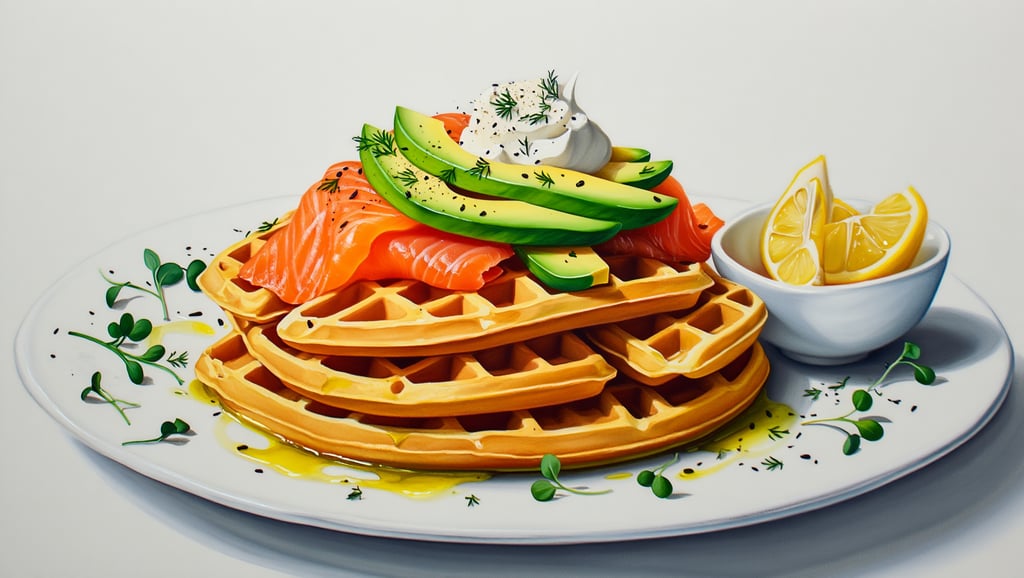
Smoked Salmon and Avocado Keto Waffles: The Brunch Maverick’s Manifesto
Crisp, golden, and rich in omega-3 rebellion, these smoked salmon and avocado keto waffles turn breakfast into a statement of intent. High in fat, low in nonsense, and served with scientific flair, they’re proof that ketosis need not be dull or beige.
THOUGHT FOR FOODNUTRITIONRECIPESBREAKFASTSKETO & LOW-CARB

The Recipe
Serves: 2
Prep Time: 15 minutes
Cook Time: 10 minutes
Ingredients:
2 large eggs
100 g (3.5 oz) almond flour
2 tbsp coconut flour
120 ml (½ cup) unsweetened almond milk
1 tbsp olive oil
1 tsp baking powder
½ tsp salt
½ tsp garlic powder
Toppings:
100 g (3.5 oz) smoked salmon, sliced
½ ripe avocado, thinly sliced
2 tbsp crème fraîche or sour cream
1 tsp lemon juice
1 tbsp chopped dill
Freshly ground black pepper
Method:
Preheat a waffle iron and grease lightly with olive oil.
In a large bowl, whisk together the eggs, almond milk, and olive oil.
Add almond flour, coconut flour, baking powder, salt, and garlic powder, whisking until smooth.
Pour the batter into the waffle iron and cook until crisp and golden, about 4–5 minutes per waffle.
Arrange the waffles on plates, top with smoked salmon, avocado, and crème fraîche.
Finish with lemon juice, chopped dill, and black pepper.
The Science of the Dish
Eggs provide lecithin and choline to maintain cellular membranes and enhance brain function during fat metabolism. Almond flour delivers monounsaturated fats and magnesium, stabilising blood glucose while promoting satiety. Smoked salmon is an abundant source of omega-3 fatty acids EPA and DHA, which reduce inflammation and improve lipid profiles in ketogenic diets. Avocado brings oleic acid and potassium to balance electrolytes and support cardiovascular health. Coconut flour adds gentle fibre that aids digestion without pushing carbohydrate limits.
Together, these ingredients orchestrate a biochemical harmony that fuels mitochondrial efficiency and supports sustained energy without sugar spikes. The result is a meal that feels indulgent but functions like nutritional architecture.
Nutritional Overview
(Per Serving)
Calories: 410
Fat: 34 g
Carbohydrates: 6 g (Net: 3 g)
Protein: 21 g
Fibre: 3 g
References:
Calder, P. C. (2017). Omega-3 Fatty Acids and Inflammatory Processes. Nutrients.
Schwalfenberg, G. K. (2012). The Health Benefits of Vitamin D and the Role of Magnesium. Molecular Nutrition & Food Research.
Westman, E. C. et al. (2018). Low-Carbohydrate Nutrition and Metabolism. American Journal of Clinical Nutrition.
Artistic interpretation - details may differ from the actual.