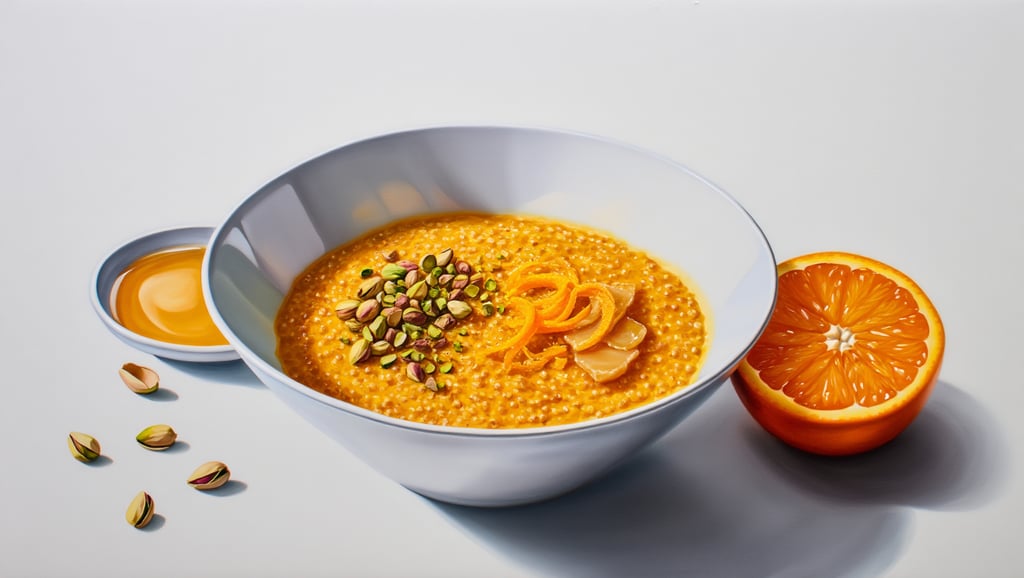
Turmeric–Ginger Amaranth Bowl with Pistachios and Orange: The Sunrise Alchemy of Anti-Inflammation
A radiant, golden breakfast bowl blending amaranth, turmeric, and ginger with citrus and pistachios for a warming, anti-inflammatory start. This zesty, aromatic dish unites ancient grains and modern nutritional science in a symphony of colour, spice, and cellular calm.
THOUGHT FOR FOODNUTRITIONRECIPESANTI-INFLAMMATORYBREAKFASTS
Nutritional Overview
(per serving)
Calories: 310 kcal
Protein: 9 g
Fat: 11 g
Carbohydrates: 42 g
Fibre: 6 g
Sugars: 10 g
(Values approximate; based on honey-sweetened amaranth and unsweetened almond milk.)
Ingredients
(Serves 2)
For the Amaranth Base
½ cup amaranth, rinsed
1 cup unsweetened almond milk
1 cup water
1 tsp freshly grated ginger
½ tsp ground turmeric
1 tbsp raw honey or pure maple syrup
Pinch of sea salt
For the Garnish
1 small orange, zested and segmented
2 tbsp chopped pistachios
A few thin slices of crystallised or fresh ginger
Drizzle of honey or almond milk (optional)
Method
1. Awaken the grains:
Combine amaranth, almond milk, water, ginger, turmeric, and salt in a saucepan. Bring to a gentle simmer, reduce heat, and cook for 20–25 minutes, stirring occasionally until thickened and porridge-like.
2. Sweeten with restraint:
Stir in honey or maple syrup to taste. Adjust consistency with a splash of warm almond milk if needed.
3. Finish and flourish:
Serve in bowls, topping with orange segments, zest, pistachios, and a few slices of ginger. Drizzle lightly with honey or almond milk for sheen and contrast.
The Science of the Dish
Amaranth (Amaranthus caudatus):
A pseudo-grain rich in high-quality protein and the amino acid lysine, amaranth offers anti-inflammatory squalene and bioactive peptides that support cardiovascular and immune function (Martirosyan et al., 2007). Its magnesium and iron content also aid in oxygen transport and muscle recovery.
Turmeric (Curcuma longa):
Curcumin, the golden compound in turmeric, is a master regulator of inflammation, acting through inhibition of NF-κB signalling and downregulation of COX-2 enzymes (Gupta et al., 2013). It enhances mitochondrial efficiency and supports the body’s natural antioxidant systems when consumed with fats or black pepper (piperine).
Ginger (Zingiber officinale):
Rich in gingerols and shogaols, ginger acts as a natural COX-2 inhibitor, reducing prostaglandin synthesis and alleviating systemic inflammation (Grzanna et al., 2005). It also improves gastric motility, making it an ideal morning digestive aid.
Pistachios (Pistacia vera):
High in lutein, gamma-tocopherol, and polyphenols, pistachios provide antioxidants that improve endothelial function and lipid metabolism (Sari et al., 2010). Their combination of healthy fats and plant protein supports sustained satiety and glycaemic balance.
Orange (Citrus sinensis):
Citrus flavanones such as hesperidin and naringenin modulate oxidative stress pathways and promote capillary integrity (Cirmi et al., 2016). The addition of vitamin C enhances collagen synthesis and boosts curcumin absorption for an amplified anti-inflammatory effect.
References
Cirmi, S., Ferlazzo, N., Lombardo, G. E., Ventura-Spagnolo, E., Gangemi, S., & Calapai, G. (2016). Neurodegenerative diseases: Might citrus flavonoids play a protective role? Molecules, 21(9), 1222.
Grzanna, R., Lindmark, L., & Frondoza, C. G. (2005). Ginger - An herbal medicinal product with broad anti-inflammatory actions. Journal of Medicinal Food, 8(2), 125–132.
Gupta, S. C., Patchva, S., & Aggarwal, B. B. (2013). Therapeutic roles of curcumin: Lessons learned from clinical trials. AAPS Journal, 15(1), 195–218.
Martirosyan, D. M., Miroshnichenko, L. A., Kulakova, S. N., Pogojeva, A. V., & Zoloedov, V. I. (2007). Amaranth oil application for coronary heart disease and hypertension. Lipids in Health and Disease, 6(1), 1–12.
Sari, I., Baltaci, Y., Bagci, C., Davutoglu, V., Erel, O., Celik, H., & Aksoy, N. (2010). Effect of pistachio diet on lipid parameters, endothelial function, inflammation, and oxidative status: A prospective study. Nutrition, 26(4), 399–404.
Artistic interpretation - details may differ from the actual.