
Whole30 Watermelon–Herb Spritzer: A Study in Summer Restraint and Natural Chemistry
This Whole30 Watermelon–Herb Spritzer is a sophisticated, sugar-free celebration of hydration and antioxidants. Crisp, herbaceous, and genuinely refreshing, it’s the drink that makes sparkling water feel like a luxury.
THOUGHT FOR FOODNUTRITIONRECIPESBEVERAGESPLANT-BASEDWHOLE30ANTI-INFLAMMATORY
Nutritional Overview
(per serving)
Calories: 48 kcal
Protein: 1 g
Fat: 0 g
Carbohydrates: 11 g
Sugar: 9 g (naturally occurring)
Fibre: 1 g
(Values approximate; based on natural fruit content and no added sweeteners.)
Ingredients
(Serves 2)
250 g (2 cups) fresh watermelon cubes, chilled
300 ml (1¼ cups) sparkling mineral water
½ lime, thinly sliced
6 fresh basil leaves
6 fresh mint leaves
Ice cubes to serve
Method
Blend the base: Purée the watermelon cubes in a blender until smooth. Strain through a fine mesh sieve to remove excess pulp, if desired, for a smoother texture.
Infuse the herbs: In a large jug, gently muddle the basil and mint leaves with the lime slices to release aromatic oils without bruising them.
Mix and fizz: Pour in the watermelon juice and top with sparkling water. Stir gently to combine.
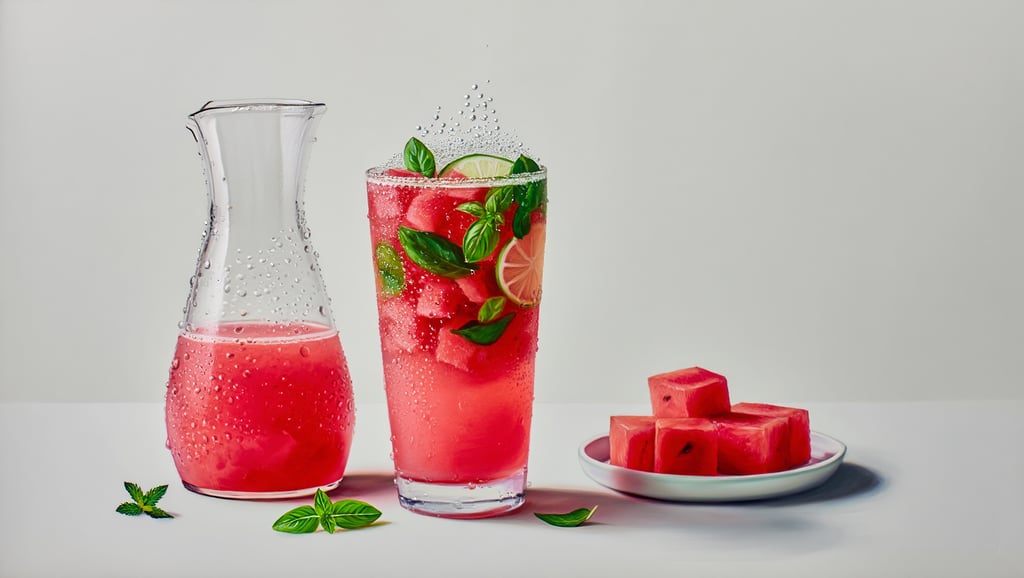
Serve with flair: Fill tall glasses with ice, pour over the spritzer, and garnish with extra herbs or a small watermelon wedge. Admire your own sophistication.
The Science of the Beverage
Watermelon (Citrullus lanatus):
Watermelon is rich in lycopene, a carotenoid with antioxidant properties that support cardiovascular health and protect against UV-induced oxidative stress (Perkins-Veazie et al., 2001). It also contains citrulline, an amino acid shown to improve blood flow and reduce muscle fatigue (Collins et al., 2007). Its natural sweetness provides satisfaction without added sugar.
Mint (Mentha spicata):
The menthol and rosmarinic acid in mint relax smooth muscles and support digestive comfort. Studies also suggest mint may help enhance alertness and mental clarity through mild stimulation of the trigeminal nerve (Moss et al., 2008).
Basil (Ocimum basilicum):
Basil’s eugenol and linalool content contribute anti-inflammatory and antimicrobial effects. These phytochemicals act on COX-2 enzymes and may help moderate systemic inflammation (Suppakul et al., 2003). The herb’s aroma adds freshness and balance, pairing beautifully with watermelon’s natural sugars.
Lime (Citrus aurantiifolia):
Rich in vitamin C, lime boosts collagen synthesis and supports antioxidant defences. Its citric acid helps regulate pH and aids digestion, while limonoids may contribute to lipid metabolism and detoxification (Benavente-García & Castillo, 2008).
Sparkling Water:
The bubbles aren’t just for show. Carbonated water can stimulate gastric motility, helping digestion and promoting a mild sense of satiety. The texture also enhances the perception of flavour, making this mocktail feel indulgent without a trace of sugar.
References
Perkins-Veazie, P., et al. (2001). Lycopene content of watermelon and tomato products. HortScience, 36(7), 1133–1135.
Collins, J. K., et al. (2007). Watermelon consumption increases plasma arginine concentrations in adults. Nutrition, 23(3), 261–266.
Moss, M., et al. (2008). Modulation of cognitive performance and mood by aromas of peppermint and ylang-ylang. International Journal of Neuroscience, 118(1), 59–77.
Suppakul, P., et al. (2003). Antimicrobial properties of basil essential oil and its principal constituents. Food Microbiology, 20(5), 491–500.
Benavente-García, O., & Castillo, J. (2008). Update on uses and properties of citrus flavonoids: New findings in anticancer, cardiovascular, and anti-inflammatory activity. Journal of Agricultural and Food Chemistry, 56(15), 6185–6205.
Artistic interpretation - details may differ from the actual.